Mineral Form, not Inclusion Rate, Determines Performance
Zinc appears in nearly every animal’s diet and most formulations meet the required inclusion rate on paper. Yet nutritionists, veterinarians and livestock producers continue to see gaps in immunity, gut integrity, reproduction, growth and resilience under stress.
The reason is simple. What is fed is not always what is retained. In trace mineral nutrition, the form of the mineral determines how much the animal can actually use. That distinction is where value is either captured or lost.
Most Zinc Never Reaches the Cells that Need it
The digestive tract is not a passive pipeline. It is a competitive environment where minerals must survive digestion, cross the gut wall and reach target tissues intact and available.
For inorganic zinc and zinc glycinate sources, several obstacles reduce that outcome:
- Dietary antagonists – Zinc readily binds with phytate and fiber in the gut lumen, forming insoluble complexes that never reach the intestinal cell surface.
- Transporter competition – At the gut wall, zinc must move through crowded metal ion uptake gates, competing with iron, calcium and other metals for entry.
- High excretion – Zinc that fails to be absorbed is lost through feces. Zinc that is absorbed but not efficiently retained is lost through urine.
The result is poor uptake, elevated waste and less zinc reaching the tissues that depend on it. This is the biological reality behind why inclusion rate alone cannot predict performance.
Zinpro Molecules are Built Differently
We approached this challenge by asking a different question. How does the body naturally absorb valuable nutrients? The answer reshaped how trace minerals are designed.
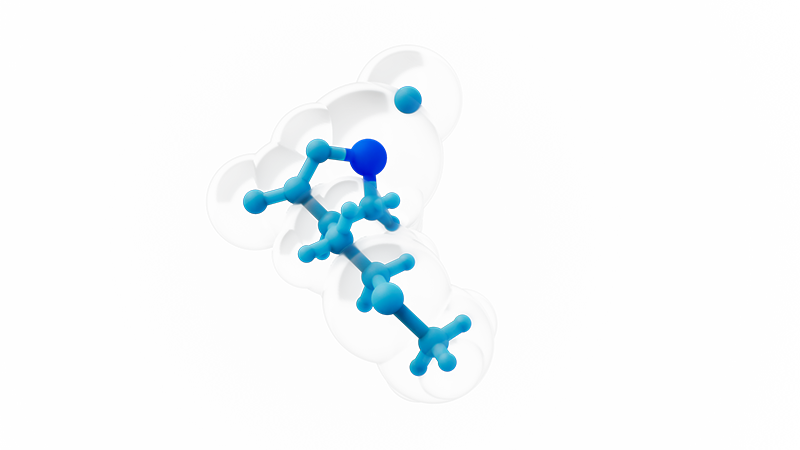
Zinpro binds zinc to a single amino acid to form a stable five-membered ring structure known as a zinc amino acid complex. This structure is the foundation of Zinpro® Original, Zinpro® Availa® and Zinpro® ProPath® trace mineral complexes.
The five-membered ring is not a loose association. Zinc forms precise coordination bonds with the amino acid, locking the molecule into a stable geometry. That structure delivers three critical advantages:
- Protection from dietary antagonists. The ring prevents zinc from binding with phytate and fiber in the gut lumen.
- Stability through digestion. The complex remains intact under normal digestive conditions rather than dissociating early.
- A different absorption pathway. Because the complex stays together, it does not rely on metal ion transporters at the gut wall.
A Different Door into the Body
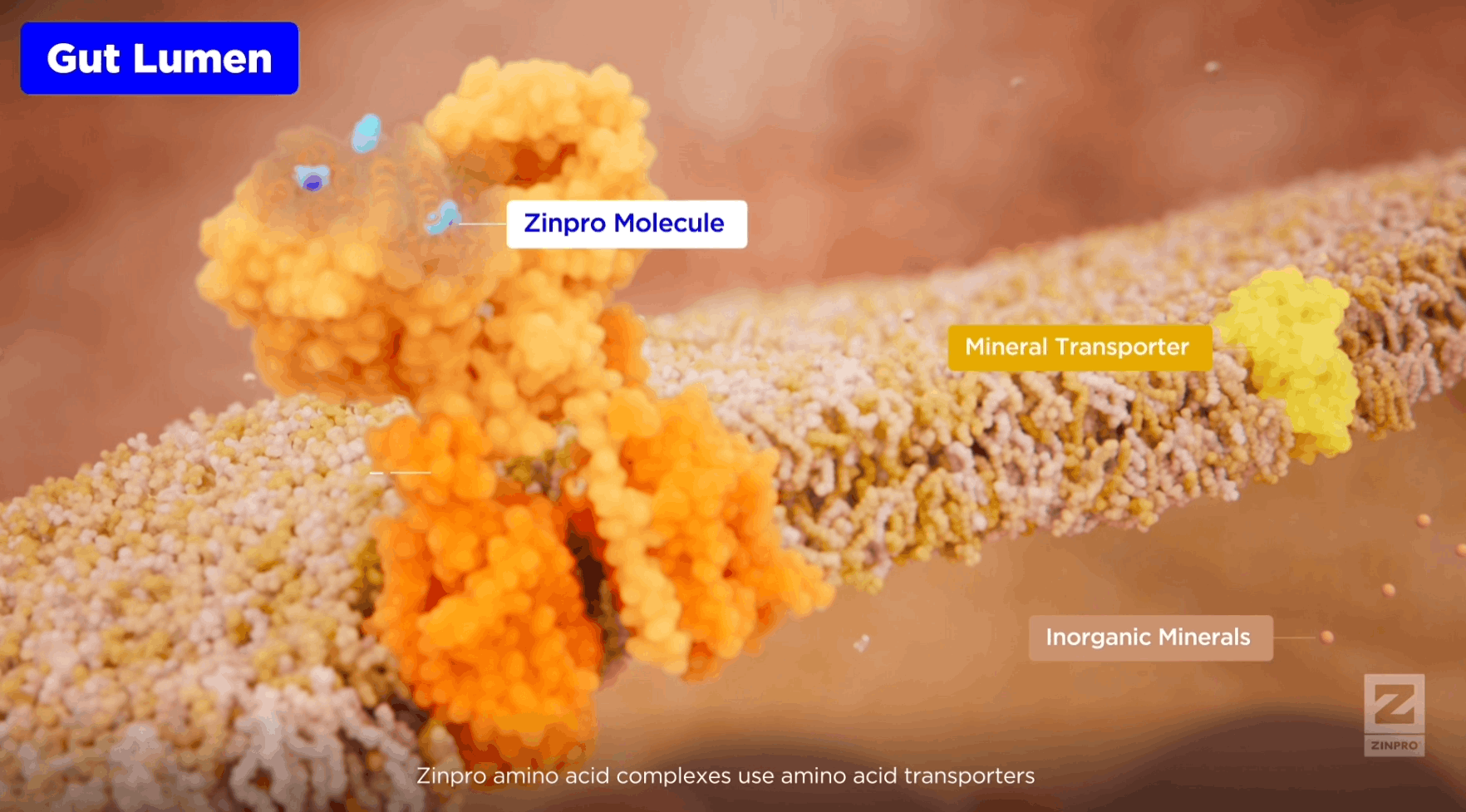
Zinpro amino acid complexes are absorbed through amino acid transporters, the same efficient pathway the body uses to absorb digested protein and free amino acids. That means no competition with iron or calcium and no congestion at metal ion gates. The intact molecule moves smoothly across the cell lining of the gut and into circulation.
From Circulation to the Cell
Zinpro molecules remain intact beyond absorption. They circulate to immune cells, skin and barrier tissues, muscles, reproductive organs and beyond. Cells then take up the intact complex through amino acid transporters, and enzymes pull zinc directly into their active sites. Because zinc is a cofactor in more than 300 enzymes and proteins, delivery, not dosage, drives biological impact.
The Proof: Up to 55% Greater Retention
Because Zinpro molecules stay bound to the amino acid through digestion, absorption and circulation, less zinc is wasted through feces and urine. A comprehensive 12-study meta-analysis confirms what the biology predicts.
Higher retention means lower urinary mineral excretion, reduced waste and greater delivery to the tissues that need zinc most. It also explains why Zinpro Performance Minerals consistently produce measurable improvements in health, performance and resilience across species.
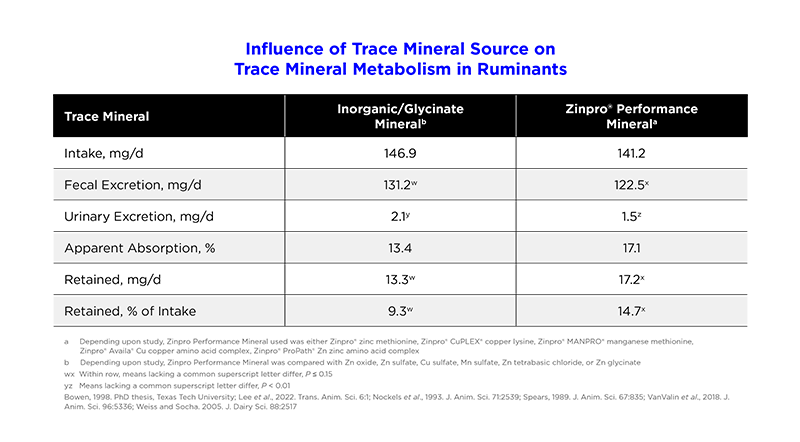
Figure 1. Zinc retention across trace mineral sources: results from a 12-study meta-analysis. A meta-analysis of 12 studies evaluating whole-body zinc retention in animals supplemented with Zinpro amino acid complexes compared with inorganic zinc (sulfate, oxide) and zinc glycinate sources. Animals fed Zinpro Performance Minerals retained up to 55% more zinc than those fed inorganic or glycinate sources. Data reflect reduced urinary and fecal excretion and greater delivery of zinc to circulating and tissue pools.
Source: Zinpro Corporation internal meta-analysis.
Reference: M20265001
Leadership Backed by Science
Zinpro leadership in organic trace mineral nutrition is neither new nor speculative. It is grounded in decades of focused investment and validated by the broader scientific community.
- More than 50% of all peer-reviewed publications on organic trace minerals are authored by Zinpro.
- Continuous investment in trace mineral science supports ongoing innovation.
- A global commitment to animal health, productivity and sustainability guides every formulation decision.
The Bottom Line: Built Differently. Proven Better.
Superior absorption and retention change the value equation. When more of what you feed reaches the animal, performance becomes more consistent, waste is reduced and return on investment improves.
This is biology, proven across decades and validated through peer-reviewed science.
That is the Zinpro Effect.
FAQ